Technical Review: mRNA vaccination overcomes haemozoin-mediated impairment of whole-parasite malaria vaccines in mice

Authors: Mariah Hassert, Lisa L. Drewry, Lecia L. Pewe, Lisa S. Hancox, Rui He, Sahaana Arumugam, Madison R. Mix, Aliasger K. Salem, and John T. Harty
Affiliations: University of Iowa, Iowa City, IA, USA
Background Introduction
Radiation-attenuated sporozoite (RAS) vaccination is considered the gold standard for liver-stage malaria immunity, capable of inducing up to 100% sterilizing protection in naïve hosts through CD8⁺ T cell–mediated mechanisms. These include circulating effector memory (T~EM~) and liver-resident memory (T~RM~) responses. Critically however, RAS efficacy drops to 30–50% in field trials conducted in malaria-endemic regions, and mechanisms underlying this failure in previously exposed individuals have remained unclear.
This paper investigates haemozoin (Hz) as a central mediator of immune impairment. Hz is a long-lived biocrystal by-product of Plasmodium haemoglobin digestion and a key indicator of previous exposure to Plasmodium. This phenomenon was demonstrated to compromise vaccine-mediated protection and CD8+ T cell immune response, though mRNA-lipid nanoparticle (LNP) vaccines can overcome this defect, especially when combined with RAS.

Materials and Methodology
The researchers first investigated Hz's effect on antigen uptake using DC2.4 cells and human monocyte-derived dendritic cells exposed to synthetic Hz (sHz). Following this, a murine model was used to verify the blood-stage exposure model. After validating the role of Hz, mice were subjected to an mRNA-LNP vaccine and challenged with virulent sporozoite.
Results
Prior malaria exposure impairs RAS vaccine efficacy
Mice with previous P. yoelii blood-stage infection exhibited a 2- to 10-fold reduction in circulating effector CD8⁺ T cells after RAS vaccination, with significant decreases in liver T~EM~ and T~RM~ populations and IFNγ production. Critically, RAS immunization failed to confer significant protection in these mice upon virulent sporozoite challenge. This impairment was conserved across Plasmodium species (P. chabaudi), including after chloroquine cure, indicating a common mechanism independent of active infection.
Haemozoin identified as the mediator
The CD8⁺ T cell defect persisted 13–19 months post-infection—correlating with Hz persistence in the liver, spleen, and bone marrow. Injection of chemically synthesized Hz alone phenocopied the impairment in a dose-dependent manner, confirming Hz as the causative factor. Importantly, the defect was NLRP3-inflammasome independent, suggesting a distinct immunomodulatory mechanism.
Hz impairs DC antigen uptake but not LNP–mRNA uptake
sHz inhibited ovalbumin uptake by DCs in a dose-dependent manner in both mouse and human cells. By contrast, LNP-encapsulated GFP mRNA achieved equivalent expression in DCs regardless of sHz exposure, revealing that LNPs bypass the endocytic pathway disrupted by Hz. This mechanistic finding is central to understanding why mRNA vaccines succeed where RAS fails.
mRNA-LNP vaccine restores protection in malaria-experienced hosts
mRNA vaccination generated equivalent CD8⁺ T cell memory responses in naïve and P. yoelii-experienced mice, overcoming Hz-mediated impairment. Furthermore, a combined RAS-plus-mRNA regimen significantly enhanced liver T~RM~ formation beyond either vaccine alone and provided robust protection against sporozoite challenge in both naïve and malaria-experienced mice. This prime-trap strategy represents a translational approach leveraging two clinically relevant platforms.
Conclusion
Hassert and colleagues identified mRNA-LNP vaccination as an effective way to circumvent Hz-mediated impairment, especially when combined with the traditional RAS method. This prime-trap dual vaccine strategy represents an important translational approach to immunotherapy which is vital for emergent challenges in clinical trials.
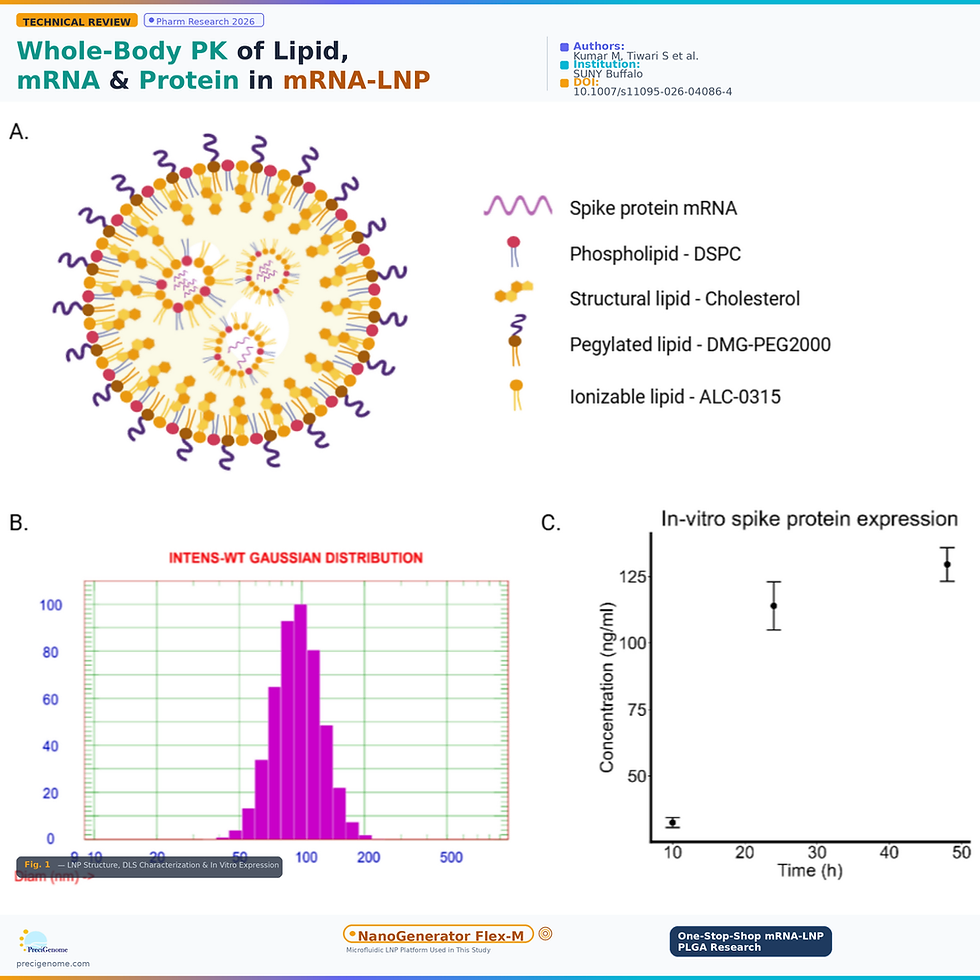
This paper utilized the PreciGenome NanoGenerator Flex-M for LNP synthesis. Uniform synthesis conditions are essential for quality RNA-LNPs, and the pressure-based microfluidics used by this instrument are optimized for pre-clinical trials on animal models.
For further details, check out the link to the article here:


Has anyone else tried this name generator for usernames?I found a couple of options that actually sounded natural instead of random.
Geometry Dash Lite: Hesitancy is not an option. You will crash if you move even a fraction of a second too quickly. If you arrive a little too late, the pattern will break. The key to success is adjusting to the level's pace rather than studying it in the conventional sense. Think of every step as a piece of music that you have to perform with your fingers rather than your ears.